


Botox for Teeth Grinding and Bruxism: How It Works, Where It’s Injected, Results & Side Effects
/ 0 comments / ~ 4 min read
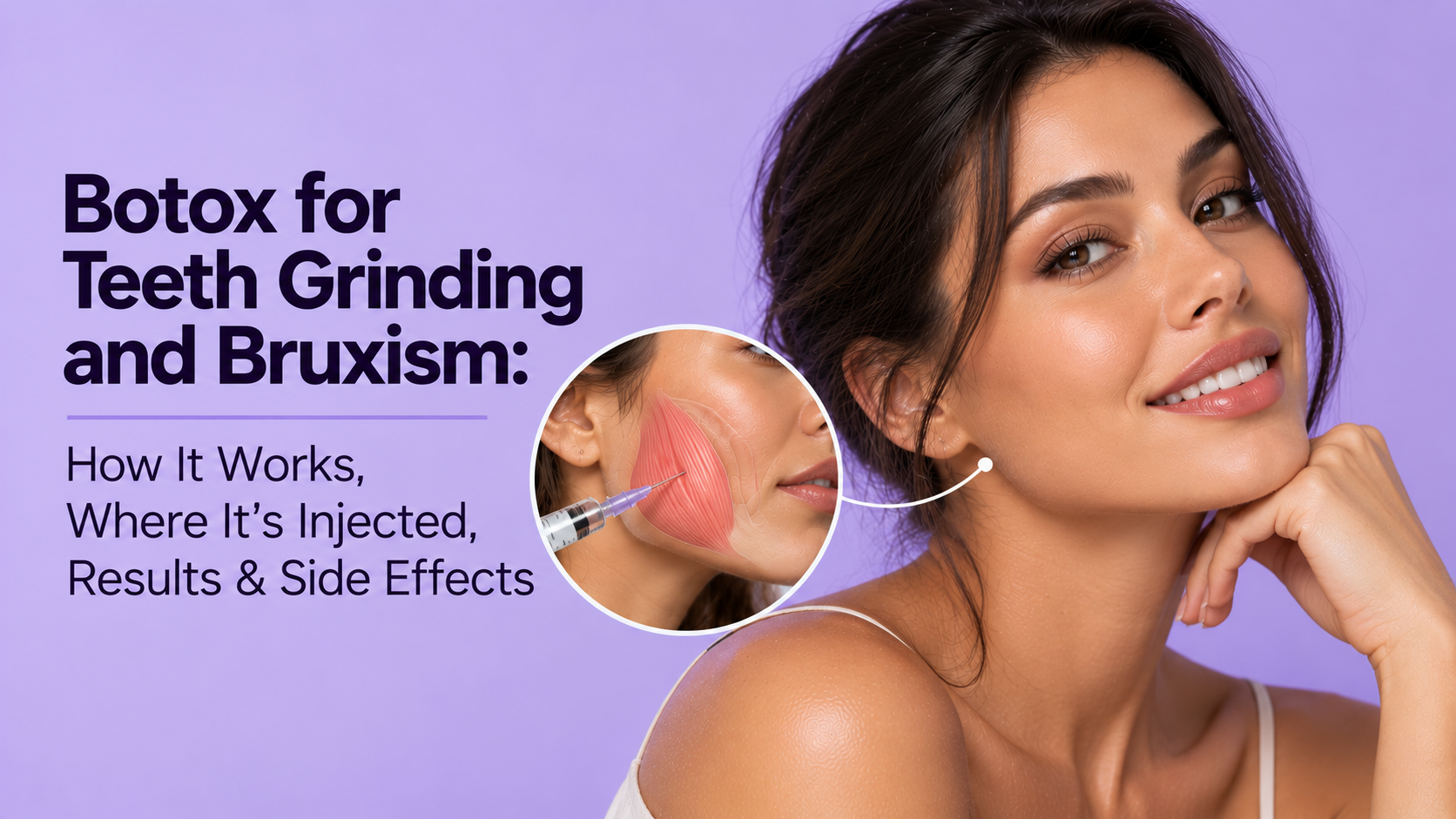
Teeth grinding can place repeated strain on the jaw muscles and dental structures. Bruxism can occur during sleep or waking hours, and its management depends on the symptoms, contributing factors, and impact on oral health.
Botulinum toxin may be considered for selected patients with persistent muscle-related symptoms. Botox for grinding teeth aims to reduce the force of muscle contractions, rather than repair damaged teeth or eliminate every factor behind the condition. Bruxism is not a listed indication in the U.S. BOTOX prescribing information, so this use is off-label there.
Table of Contents
How Does Bruxism Botox Treatment Work?
Botulinum toxin type A temporarily reduces acetylcholine release at the neuromuscular junction, decreasing activation of the treated muscle. In bruxism management, the aim is to reduce excessive contraction strength while preserving useful chewing function.
The distinction between force and frequency matters. A randomized study of sleep bruxism found reduced masseter contraction intensity without preventing the generation of bruxism episodes. Relaxing the muscles can therefore change how strongly a patient clenches without necessarily stopping the underlying sleep-related activity.
Botox bruxism treatment is best understood as one component of symptom management. It does not replace assessment of dental damage, daytime habits, medication-related factors, or possible sleep disorders.
Can Botox Help with Teeth Grinding?
Clinical studies suggest that some patients experience reduced muscular discomfort and less forceful jaw activity following treatment. However, trials are relatively small and differ in the products, muscles, and outcomes assessed.
Potential treatment goals include:
- reducing the intensity of jaw-muscle contractions;
- easing pain associated with muscular overactivity;
- improving the patient’s perception of jaw comfort;
- reducing the functional burden of persistent clenching.
Bruxism and temporomandibular disorders are not interchangeable diagnoses. A patient with joint pain, restricted opening, or clicking may require a different assessment from someone whose main complaint is muscular fatigue. Treatment should follow the identified source of symptoms.
Where to Inject Botox for Bruxism
The masseter muscles, located on each side of the lower face, are common treatment targets because they contribute substantially to jaw closure. Some clinical studies have also included the temporalis muscles, which lie over the temples and assist in closing the jaw.
For practitioners considering where to inject Botox for bruxism, muscle selection should reflect examination findings rather than a standard facial map. Relevant observations include contraction patterns, tenderness, asymmetry, existing weakness, and baseline chewing function.
Precise placement requires knowledge of the individual anatomy and neighboring facial muscles.
How Many Units of Botox for Bruxism Are Needed?
There is no universally established dose for bruxism. Published protocols vary, and the appropriate amount depends on the formulation, muscles selected, clinical findings, previous response, and tolerability.
When documenting a treatment plan, distinguish between the dose per muscle, per side, and the total session dose.
BOTOX is a specific brand of onabotulinumtoxinA. Its potency units cannot be assumed equivalent to those of other botulinum toxin preparations. A dose reported for one formulation should not be transferred directly to another product.
Botox for Bruxism Before and After
The most useful before-and-after assessment focuses on symptoms and function. Patients may report reduced jaw tension or discomfort even without an obvious change in their face. Conversely, a visible contour change does not demonstrate that sleep bruxism has resolved.
Record comparable measures before treatment and at follow-up:
- frequency and severity of jaw discomfort;
- morning muscle fatigue and daytime clenching awareness;
- muscle tenderness on examination;
- chewing comfort and any new weakness;
- the patient’s overall impression of benefit.
Studies have assessed outcomes at intervals such as four, eight, and twelve weeks. These are observation points, not a universal treatment schedule. Effects are temporary, and symptom relief may follow a different course from changes in measured muscle activity. Repeat treatment should be based on reassessment rather than an automatic calendar interval.
Botox for Bruxism Side Effects
Possible effects include injection-site discomfort or bruising, temporary chewing fatigue, and unwanted changes in facial movement. Clinical trials have reported transient weakness and changes in the smile.
The prescribing information also warns about potentially serious effects from toxin spread. New swallowing, speech, or breathing difficulties require urgent medical attention. Assessment should include relevant neuromuscular conditions, medicines, and previous reactions to botulinum toxin.
Combining Treatment with Dental Management
Botulinum toxin and dental appliances serve different purposes. An appropriately fitted appliance can protect teeth from grinding-related damage, while toxin treatment targets muscle activity. Reduced pain after injection does not establish that dental protection is no longer needed.
Coordination between the treating practitioner and dentist helps keep these goals aligned. For awake bruxism, habit awareness and behavioral measures remain relevant; suspected sleep-related conditions may warrant further evaluation. Combining symptom assessment with ongoing dental care provides a broader picture of treatment success than changes in jaw strength alone.
Available on TO THE BEAUTY: