


PLLA Fillers and Injections: Poly-L-Lactic Acid Collagen Stimulation, Benefits, Before and After
/ 0 comments / ~ 6 min read
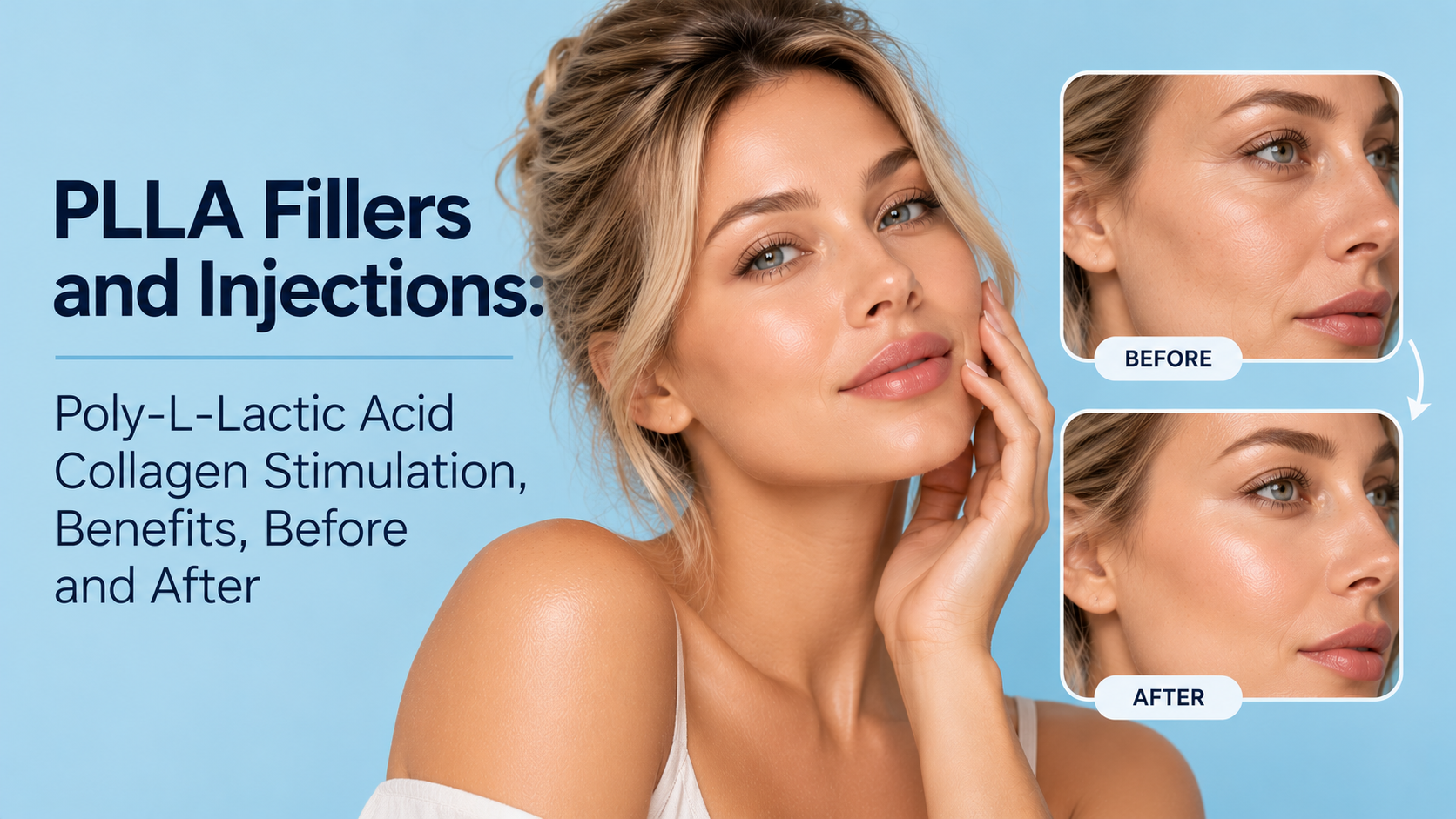
Changes in facial volume develop gradually. Cheeks may appear less full, folds become more noticeable, and the face can lose some of its previous softness and definition. For patients seeking progressive improvement, PLLA fillers offer an approach based on stimulating collagen production.
Unlike treatments chosen primarily for an immediate filling effect, a PLLA injection works over time. Understanding this process helps explain the treatment timeline, what before-and-after photographs can show, and how different products should be evaluated.
Table of Contents
What Is PLLA?
PLLA stands for poly-L-lactic acid, a synthetic, biodegradable polymer used in certain medical devices and injectable aesthetic products. In facial aesthetics, it belongs to the category of biostimulatory fillers: materials intended to encourage a tissue response that supports collagen formation.
PLLA gradually breaks down in the body, while the resulting cosmetic improvement develops over a longer period. The American Society for Dermatologic Surgery describes this progressive process as an important characteristic of injectable poly-L-lactic acid.
The phrase PLLA collagen stimulator describes this treatment concept. However, products containing the same polymer may differ in formulation, preparation requirements, approved indications, and clinical evidence.
How Do PLLA Injections Work?
A professional PLLA treatment introduces a formulated suspension containing poly-L-lactic acid particles into the appropriate tissue. The material initiates a local response associated with new collagen formation, producing changes that become apparent gradually.
For patients, the practical implication is straightforward: the appearance immediately after a session does not represent the finished result. Treatment planning needs to allow time for the response to develop.
PLLA Filler vs. Hyaluronic Acid Filler
Both categories can contribute to facial rejuvenation, but their treatment characteristics differ.
| Feature | PLLA-based treatment | Hyaluronic acid filler |
| Main treatment concept | Progressive collagen stimulation | Filling and smoothing through an HA gel |
| Visible changes | Develop over several weeks or months | Often apparent shortly after placement |
| Planning | May involve a staged course | Depends on the product and correction required |
| Material | Biodegradable synthetic polymer | Hyaluronic acid, often crosslinked |
The FDA describes HA as a material that binds water and produces a filling effect, while PLLA results become increasingly apparent over time. Neither category is universally preferable; selection depends on the treatment objective and the specific product.
What Are the Potential Benefits of PLLA Treatment?
A poly-L-lactic acid filler may be considered when the aim is a gradual improvement in facial fullness and the appearance of selected wrinkles or folds.
Potential treatment goals include:
- restoring a fuller appearance in areas affected by volume loss;
- softening selected facial folds;
- improving the appearance of cheek wrinkles;
- creating a progressive cosmetic change;
- supporting longer-term facial rejuvenation.
Approved uses are product-specific. A consultation should distinguish volume-related concerns from problems that require another approach. Collagen stimulation cannot address every cause of facial aging.
PLLA Before and After: What to Expect
PLLA before-and-after results should be assessed as a progression rather than a single immediate transformation.
Immediately After Treatment
The treated area may look fuller because of the administered suspension and temporary swelling. This early appearance should not be presented as newly formed collagen.
As the Response Develops
Over the following weeks and months, gradual changes may become visible. The purpose of follow-up appointments is to assess the response before deciding whether further correction is appropriate.
After the Planned Course
A meaningful comparison focuses on the original treatment goals: facial fullness, the appearance of folds, or cheek wrinkles. The number of sessions and review intervals depend on the product and clinical assessment. ASDS describes PLLA treatment as a process that commonly involves multiple appointments rather than a one-session result.
How Long Do PLLA Fillers Last?
PLLA is biodegradable, but its visible effects can last longer than the initial treatment period. FDA information describes results lasting up to two years for established PLLA filler treatment, with improvement developing over several weeks.
That duration is a reference point, not a promise for every brand or patient.
When discussing longevity, ask which evidence supports the proposed product, how the clinic evaluates maintenance needs, and whether the expected outcome concerns volume, wrinkles, or another measurable change.
Korean PLLA Fillers at TO THE BEAUTY
For professional practices exploring Korean PLLA options, TO THE BEAUTY offers products with different brand presentations and treatment positioning.
Olidia PLLA is presented as a professional product designed to restore lost facial volume through collagen stimulation. It offers a relevant option for practitioners considering a gradual approach to facial rejuvenation.
The listing identifies PRP Science Co., Ltd., South Korea, as the manufacturer and gives a presentation of one 365 mg vial. This is the listed vial quantity; it should not be assumed to represent 365 mg of pure PLLA without checking the full composition.
Power Col-Tra PLLA is another Korean product available for professional consideration. Positioned around reducing the appearance of fine lines and wrinkles, it complements discussions of collagen-focused aesthetic treatment.
The product is manufactured by Stunmedical in South Korea, supplied in a single 365 mg vial. Practitioners can review its specifications alongside their treatment goals and the manufacturer’s current instructions.
When comparing PLLA filler brands, assess the exact formulation, supporting evidence, preparation requirements, traceability, and regulatory status in the country of use. Availability in an online catalogue does not establish local authorization.
Is a PLLA Skin Booster the Same as a PLLA Filler?
The expression PLLA skin booster is used in marketing, but it does not define a standardized formulation or procedure.
A product described as a “beauty collagen stimulator” still needs to be assessed by its actual composition and intended use. The relevant questions are whether it is intended for volume correction, wrinkle treatment, or another purpose—and whether the proposed administration follows its instructions.
Names such as booster, filler, and collagen stimulator can help describe a treatment, but they should not replace product-specific information.
What Matters About PLLA Injection Technique?
PLLA injection technique is a professional consideration because preparation, anatomical placement, distribution, and treatment planning affect both outcomes and risks.
Patients do not need to select a technique themselves. They should instead ask whether the practitioner has training in the exact product and can explain the treatment plan, follow-up process, and management of complications.
Product-specific training matters particularly when switching brands. A familiar ingredient does not make two formulations interchangeable.
Safety and Recovery After PLLA Injections
Possible early effects of injectable fillers include swelling, bruising, redness, pain, and tenderness. Less common complications include infection, inflammatory reactions, and nodules. Accidental injection into a blood vessel can cause serious injury, making anatomical expertise and appropriate clinical facilities essential.
PLLA-related bumps may also appear after the initial recovery period.
Aftercare should follow the treating clinician’s instructions for the exact product. Persistent lumps, increasing redness, or unexpected swelling should be reported. Severe pain, changes in skin colour, or visual symptoms require urgent medical assessment.
A Personalized Approach to PLLA Collagen Stimulation
PLLA treatment suits a discussion about gradual change: what needs correction, how progress will be measured, and how much time is needed before further treatment is considered.
The strongest treatment plan connects the patient’s goals with a well-understood product and realistic expectations. For practitioners comparing options such as Olidia and Power Col-Tra, the starting point is the same: verify the formulation, review the relevant documentation, and select the product according to its intended use.